Gaming Harmonicode: A Clear Guide to the Meaning, Benefits, and Future of This Niche Gaming Idea

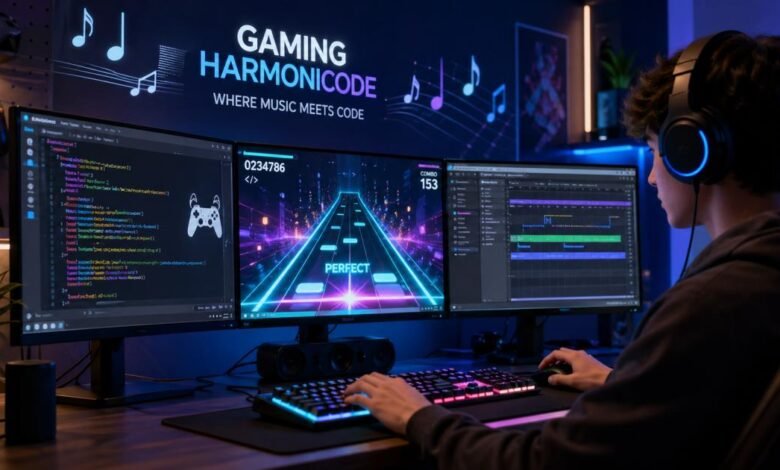
Gaming harmonicode is not a standard gaming category with one fixed definition. In the sources I found, it is used as a broad idea that blends music, rhythm, coding logic, structured gameplay, and interactive feedback. Some pages describe it as music-based gameplay, some emphasize pattern and timing, and others present it as a more general fusion of harmony and programming-style game design. Taken together, the term seems to point to a style of gaming where sound, structure, and player response all matter at the same time.
That makes the topic interesting for players, creators, and readers who care about modern game design, mobile gaming experience, audio accessibility, and even game development software. In simple terms, gaming harmonicode can be understood as a concept that tries to make gameplay feel more synchronized, more thoughtful, and more immersive than a purely reflex-based game loop.
What Does Gaming Harmonicode Mean?
At its core, gaming harmonicode appears to combine three ideas: harmony, code, and gameplay. The niche pages I found describe it as a blend of rhythm, logic, interactive design, and music-driven game mechanics. One source focuses on music-based games and piano learning experiences, while another frames the idea around structured gameplay, adaptive difficulty, and pattern recognition.
Because the term is used inconsistently, it is best to treat gaming harmonicode as a concept rather than a formal industry label. In practical terms, it usually describes games where the player must pay attention to timing, sequences, musical cues, and system feedback. That interpretation fits the way several niche gaming pages present the idea.
Why the Term Is Getting Attention
Gaming audiences are often drawn to experiences that feel fresh, skill-based, and rewarding. The pages I reviewed repeatedly highlight the same themes: rhythm-based mechanics, logical progression, interactive learning, and cross-platform access. In other words, gaming harmonicode is attractive because it promises both entertainment and a sense of mastery.
That appeal is not random. Game accessibility guidance also shows that players respond well to clear feedback, adjustable difficulty, and audio controls that separate music, effects, narration, and voice chat. Those design choices can make a game more playable and more enjoyable for a wider audience.
The Core Elements Behind Gaming Harmonicode
1) Rhythm and timing
A major part of this concept is rhythm. The sources describe players syncing actions to beats, melodies, or pattern changes. That makes timing a central skill rather than a side feature. Rhythm-based play is also a common way to build challenge without relying only on fast reactions.
2) Structured logic
Another recurring idea is structure. Some pages explain gaming harmonicode as gameplay that follows logical progression, adaptive responses, and pattern recognition. That makes it feel closer to puzzle design or systems thinking than to a simple arcade loop.
3) Feedback loops
A good harmonicode-style game depends on quick, understandable feedback. Players should know whether they are on beat, whether they solved a pattern correctly, and how their choices affect the next stage. Strong feedback loops are one reason these games can feel satisfying and addictive in a healthy, skill-based way.
4) Audio design
Audio is not just background decoration in this style of gaming. It often acts as a guide, a timing cue, or a core part of the challenge. Accessibility guidance recommends letting players separately adjust music, effects, dialogue, and voice chat so important information is not lost under layered sound. That advice matters even more in music-centered or rhythm-centered games.
5) Accessibility
A strong gaming harmonicode experience should not exclude players who hear differently, process information differently, or prefer different difficulty settings. Public accessibility guidelines emphasize text display, contrast, audio options, subtitles, narration, input flexibility, and difficulty settings as core best practices.
Gaming Harmonicode and Music-Based Gameplay
The most obvious connection in the sources is music. One page describes HarmoniCode Games as offering music-based games, piano learning experiences, rhythm challenges, and composition tools. Another describes Harmonicode video games as a fusion of music and gameplay that asks players to align their actions with rhythm and melody.
This matters because music can do more than create atmosphere. In game design, it can guide pacing, signal danger, reward success, and help players anticipate what comes next. When used well, music becomes part of the game system rather than a separate layer on top of it.
For readers searching for terms like music gaming app, rhythm game mechanics, or audio synchronization in games, this is the heart of the idea: the soundtrack helps shape gameplay, and gameplay helps shape how the soundtrack is experienced. That combination is what makes the concept feel different from ordinary play.
Gaming Harmonicode and Coding Logic
The code part of the phrase is also important. Several sources describe harmonicode games as structured systems built around logic, algorithm-like patterns, and adaptive responses. They are not saying players need to be programmers. Instead, they use coding as a metaphor for rules, sequences, and predictable structure.
That is useful for readers interested in game development software, interactive game design, and logic-based gameplay. A game with harmonicode-style design often feels organized, layered, and intentional. Each action may open a new pattern, timing window, or decision path.
This is also why the idea has educational appeal. The sources repeatedly mention learning, problem-solving, coding concepts, and analytical thinking. In a broad sense, the concept overlaps with game-based learning, where structured play supports skills like pattern recognition and sequencing.
What Players May Like About Gaming Harmonicode

Better engagement
Players who enjoy a challenge usually like games that keep them mentally active. Harmonicode-style games are often described as intellectually stimulating, immersive, and balanced. That mix can make them feel rewarded without becoming overwhelming.
Skill-building feel
The sources commonly connect this style of gaming with pattern recognition, timing accuracy, coordination, and decision-making. A rhythm-and-logic design can make progress feel earned because the player improves through practice rather than luck.
Flexible formats
Another advantage is platform flexibility. The niche pages mention PC, mobile, web, educational platforms, and VR environments. That makes the concept appealing for people looking for a mobile gaming experience, a browser-based game, or a PC gaming setup that does not require heavy learning upfront.
What Developers Can Learn From the Idea
Even if gaming harmonicode is not a formal genre, it points to useful development lessons. The biggest one is balance. A game should combine sound, rules, challenge, and feedback in a way that feels natural. If any one part dominates the others, the experience can become confusing or tiring.
The second lesson is clarity. Accessibility guidance strongly supports readable interfaces, distinct audio channels, captioning, and adjustable difficulty. Those are not niche features. They are basic quality features that help more players enjoy the game.
The third lesson is adaptability. The sources describe adaptive difficulty, dynamic responses, and progressive challenge. In practical design terms, that means the game should meet players where they are, then grow with them instead of punishing them too quickly.
Gaming Harmonicode and Accessibility
Accessibility is one of the strongest real-world lessons in this topic. Public guidelines from major platforms and accessibility resources say games should let players adjust volume separately for music, effects, narration, and voice chat, and they should support subtitles, captions, screen narration, contrast controls, and input flexibility.
That is especially relevant for music-driven play because music can easily compete with speech or important audio cues. If the sound mix is not adjustable, players may miss the information they need to progress. A polished harmonicode-style game should therefore protect both immersion and clarity.
Accessibility also improves trust. Readers, parents, and players are more likely to see a game as thoughtful and professional when it includes options that respect different needs. For researchers comparing inclusive game design or audio accessibility, this is a major strength of the concept.
How Gaming Harmonicode Compares With Traditional Games
Traditional games often focus mainly on action, story, competition, or exploration. Harmonicode-style games, by contrast, are described as more structured, more rhythm-aware, and more system-driven. The difference is not that one is better than the other. It is that they reward different kinds of attention.
In a harmonicode-style game, the player may need to notice patterns, manage timing, and respond to musical or algorithmic cues. That can create a more methodical experience than a game built mostly around reflexes or open-ended exploration.
For many players, that is a plus. For others, it may feel too structured. The best way to think about it is this: traditional games often tell a story, while harmonicode-style games often teach a rhythm or a system.
Pros and Cons of Gaming Harmonicode
Pros
It can feel fresh because it blends music, logic, and interaction in one design. It may also be engaging for players who like timing challenges, pattern-based gameplay, or educational elements. Accessibility-minded design can make it even better for more people.
It can also support a strong learning-style experience. Rhythm games and structured musical play have been studied in learning and motor-cognitive contexts, which supports the idea that rhythm-based design can do more than entertain.
Cons
The same structure that makes the idea appealing can also make it harder for casual players if the pacing is too strict or the instructions are not clear. A game that leans too heavily on timing or audio cues without accessibility options can exclude players instead of inviting them in.
It can also be confusing as a keyword because the term is not standardized. Since different pages define it in different ways, readers should be careful not to assume there is only one official meaning.
Who Gaming Harmonicode Is Best For
This style of gaming is a strong fit for players who enjoy rhythm, problem-solving, and structured progression. It can also appeal to learners who like interactive tools, especially when the game includes clear levels, pattern recognition, and skill development.
It is also a good match for creators and developers who care about user engagement, audio design, educational play, and adaptive challenge. These are all areas where modern game design, mobile gaming, and accessible interfaces overlap.
For families, teachers, and general audiences, the safest way to judge whether a harmonicode-style game is a good fit is to look for clear controls, readable UI, adjustable sound, and a sensible difficulty curve. Those are signs of a well-built experience.
Practical Tips for Choosing a Good Gaming Harmonicode Experience
Look for games that explain the rules clearly from the start. The most helpful experiences are usually the ones that introduce a basic pattern, then slowly add complexity instead of overwhelming the player right away.
Check whether the game offers separate volume controls, captions, and other accessibility options. Those settings matter a lot in music-heavy or rhythm-heavy experiences.
Pay attention to whether the game feels balanced. A good design should offer a challenge, but it should also feel fair. If a game depends too much on memorization with no feedback, it may not hold attention for long.
The Future of Gaming Harmonicode
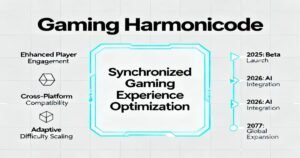
The future of this idea will likely depend on how developers blend music, personalization, and accessibility. The niche sources already point toward AI-driven personalization, cross-platform play, educational use, and immersive sound design. Those are all directions that fit modern gaming trends.
A more important future trend may be inclusivity. Public guidelines show that the industry is steadily moving toward more accessible audio, clearer interfaces, and more configurable gameplay. That means harmonicode-style design could become more attractive if it stays flexible and player-friendly.
If that happens, the phrase gaming harmonicode may grow from a niche keyword into a broader way of describing games that feel musical, logical, and responsive at the same time.
Conclusion
Gaming harmonicode is best understood as a niche idea that connects music, coding logic, rhythm, and interactive gameplay. The sources I found describe it in slightly different ways, but they all point toward the same core pattern: a game experience built around timing, structure, feedback, and immersion.
For players, the appeal is clear: it can feel more engaging, more skill-based, and more memorable than ordinary gameplay. For developers, it offers a useful reminder that good game design depends on balance, accessibility, and clarity. A strong experience should not only sound good and look good, but also feel fair and easy to understand.
If you are exploring this topic for content, research, or game design, the best next step is to focus on how rhythm, user experience, and accessibility work together. That is where the idea becomes practical rather than just catchy. Share your thoughts in the comments if you have seen gaming harmonicode used in a different way.
FAQ
Q1. What is gaming harmonicode?
It is a niche term used for games or game concepts that blend music, rhythm, coding logic, and structured gameplay. The wording varies across sources, so it is best treated as a concept rather than a formal genre.
Q2. Is gaming harmonicode a real gaming genre?
It appears to be a real phrase used online, but not a standardized industry genre. Different pages define it in slightly different ways.
Q3. What makes a game feel like gaming harmonicode?
Rhythm, timing, pattern recognition, audio cues, and structured progression are the main features described in the sources.
Q4. Can gaming harmonicode be educational?
Yes. The concept overlaps with learning-focused play, especially when games teach logic, sequencing, or rhythm skills. Research on rhythm games also points to learning and motor-cognitive applications.
Q5. Is accessibility important in gaming harmonicode?
Very much so. Audio, captions, contrast, input options, and difficulty settings are all important in game accessibility guidance, especially for music-heavy or cue-based games.
Q6. Who might enjoy this type of game most?
Players who like rhythm challenges, logic puzzles, structured progression, and music-driven gameplay are the most likely to enjoy it.
Q7. What should I look for in a good harmonicode-style game?
Look for clear tutorials, fair difficulty, strong audio design, and accessibility settings that let you control music, effects, and narration separately.
Q8. Why is the term hard to define?
Because it is used in a few niche pages in different ways, with some pages emphasizing music, some emphasizing coding logic, and others emphasizing general game structure.